Search This Blog

Wednesday, May 1, 2013

Afri Roots: Cultural Bike Tours

     Cultural tours are an emerging form of tourism in East Africa.  Mejah Mbuya and his team at Afri Roots in Tanzania are offering tours with a unique spin... bicycle wheels.  While culture tours are often in the rural areas, Afri Roots offers downtown bicycle tours of Dar es Salaam; Tanzania's largest city.  You will be treated to a great workout in addition to seeing beautiful beach views, bustling markets and city streets and historical buildings that tell the interesting past of the "Haven of Peace".


Tanzanian flag from inside a car in the Sinza neighborhood of Dar es Salaam.

"Dar es Salaam is not only about traffic jams. Beyond the city center, peninsula and highways there is another face of Dar es Salaam – back roads with vibrant community and street life keeping the city in motion. This tour takes you to the “real” Dar es Salaam accessible by bike or on foot."

Mejah in an Afri Roots vehicle.


     In addition, Afri Roots customizes safari tours to other amazing regions like: Serengeti, Mikumi, Morogoro and Arusha.  I have been on culture tours in areas like Moshi and Kilimanjaro and they are amazing.  Touring the streets of Dar es Salaam was exhilarating and I explored some portions of Kigamboni on bike.  I enjoyed being free to route around traffic (which is getting worse as the number of cars increases each year) and I was able to interact with the landscape in a new, profound way.  After working up a sweat we took a dip in the ocean and once we were back on our bikes we were dry in minutes.

     Afri Roots is a great way to see both sides of Tanzania: rural and urban.  They will work to customize a personal package for your group and group rates will definitely make your trip more affordable so consider bringing along as many people as you can.  Amazing beaches and palm trees, African savannah  or mountain rainforest... you pick! 

 Cyclists and tourists alike should try Afri Roots if you are planning a safari for the coming holiday!

Our office: 
Maweni, Kigamboni peninsula
Phone +255-732-926-350
Mobile +255-787-459-887 or +255-713-652-642
info@afriroots.com


View of the Indian Ocean at low tide from Kigamboni. 

Tuesday, February 7, 2012

Frontline Books

     My first career oriented job after college was at a local Black bookstore in Chicago.  I was blessed to come up through the ranks and publish two books with the help of Frontline Books.  The history of this place is immense.  For starters, it is one of almost less than a handful of Black bookstores left in the city of Chicago; where there used to be dozens.  Not only that, but the current location at 5206 S Harper St. has undergone several incarnations of Black bookstores over the years- all with different names but essentially the same flavor.  You know, a spot where one finds Metu Neter, Ivan Van Sertima, John Henrik Clarke, Isis Papers etc... and will try to special order any book under the sun.

     Recently, the area surrounding the bookstore has undergone some lightweight gentrification and the construction has cut off the majority of foot traffic for this Hyde Park gem. Here, check this out:


Several weeks later, there is a new sign and update on the situation:

I promote this place not only because it is the one stop shop for banging incense, food for thought, Ting, awesome jewelery, African flags and clothes but also because it represents a Black-owned business standing firm in the face of community redevelopment. Yes, I capitalize Black.  The struggle to exist and compete with other ethnicities has been an issue in our communities throughout history and Frontline Distribution is a sterling example of self determination in the 21st century.

For more info call 773 288 7718. 


Monday, May 30, 2011

Virtual Village

Kijiji is the KiSwahili word for village.  Buy Africa is a virtual village of African places, people and products.  The idea of food is an area that has not been touched on this blog.  Kijiji Grows represents the East Bay as an aquaponics farming company, teaching Oakland youth about Science and Agriculture.  Their idea is so symbiotically amazing that I had to feature it here.

From their site:


Kijiji is swahili for village.

It takes a village to grow individuals.

It takes individuals to make a village grow.

Kijiji represents that we are all about community – the people.

"The company's co-owners, Keba Konte and Eric Mandu, say they hope their presence will contribute to the community. "We're not selling any technology, we're absolutely not selling produce," said Konte, who's also the owner of Guerilla Cafe in Berkeley. "As a company, what was in it for us was that we would be able to demonstrate what this technology does." The East Bay company sells aquaponics gardening systems, in which a pipe cycles water between a fish tank and a garden box, allowing the plants to be fertilized by the fish waste and the roots of the plants to filter fresh water back to the fish."

-East Bay Express 04/09

So you see, this technology has the means to narrow the education gap and increase food security in "food deserts" in inner cities.  There are efforts to bring the technology to Mandu's native Kenya as well.  Here is how it works.


Kijiji Grows from Jill Replogle on Vimeo.

What a great idea! I definitely want to use this or at least try the food they can produce. Find them on Facebook & Twitter for more information!


Saturday, March 26, 2011

Bernos Tees

The Ethiopian/ Habesha Disapora is a force throughout the Americas; world-wide really.  Bernos™African T-Shirts is a brand created by a few brilliant members of the aforementioned Diaspora to represent the Motherland through stylish T-shirts.  Here is some background from their site.


The bernos™ name

The word bernoose comes from Amharic, one of the many Ethiopian languages, and refers to a one-piece cloak originally worn by the Arabs who immigrated to North Africa. The style caught on and many in North Africa continue to wear variations of the original design today. The Ethiopian bernoose is thick, dark and made of wool. It features a tailored point designed in the 19th century to accommodate and protect a rifle.
For us, the name symbolizes our connection to the values passed down to us by our culture and at the same time offers us a chance to express how we’ve made it our own — with a design on a t-shirt — because we too want to show off our own modern-day bernos.
"Bernos™ started in March 2006 as a venture to create high-quality graphic tees inspired by our childhood memories of Africa. Everyone of our tees screams Africa.
All of the design concepts for all bernos tees are entirely created by us and are printed on the world’s finest t-shirts by American Apparel which manufactures’ their products Los Angeles, California, in an absolutely sweatshop-free environment."

Take it from me, the gear is Dope with a capital D.  From East Africa to the West Coast of Cali, bernos™ is representing BIG.  They offer retail (around $20) and wholesale pricing on their website for both kids and adult sized shirts.  My personal favorite designs are as follows:

 Afro Jazz

African Warrior

Made in Africa

You can find them on Twitter and Facebook. In recognition of this last Tee, Stephen Marley's "Made In Africa".


Monday, January 10, 2011

Ghana's Freedom Fighting Fashionista

Africa is often the inspiration for European fashion.  Conversely, it is rare to find fashion brands coming from an African source.  Trends may include bright colors, ethnic designs or zebra prints etc... but how often does one find African-inspired fashion coming from an African source?


Enter Mina Danielle... 

Created by Dorothy Attakora, Mina Danielle is a fashion brand exhibiting African flair with Western-cut lines that blend for a unique take on contemporary style.  In addition to fierce designs, Mina Danielle also supports progressive action for Africa.  Buy Africa got in touch with with the creator of Mina Danielle and here is what she had to say about her fashion brand:


Buy Africa: What is your name and where are you from?

Dorothy Attakora:  My name is Dorothy Attakora. I hail from the Asante region of Kumasi, Ghana, but currently reside in Toronto, Canada.


BA: How did you get into fashion?

DA:  I've always loved designing my own clothing, even from a young age. I would custom make all my dresses for special events, first communions, graduations, and proms. My grandmother in particular would always make African clothing for me and send them from Ghana. In retrospect, I can say I attribute my passion for our bright, bold prints to her. She would always purchase the most delicious, decadent prints that not only drew attention, but also made you feel like the most beautiful Africa Queen... ready to rule the world.   

I remember early memories of spending my summers in New Jersey. My younger cousins and myself would spend endless days drawing up sketches and creating our own make-shift catalog.  We would read fashion magazines and consume all things fashion. When I visited Ghana in 2008, I found I spent my days doing the same thing.  Even in my adult life I could not escape the yearning to create my own designs. Visiting markets and searching for the most incredible prints and then sketching designs to bring them to life. It was then that I knew I needed to take the plunge and thus using the names of my cousins (Mina & Danielle, respectively) as my inspiration for the name of the clothing line.


BA:  Being African, how do you feel about the way our people are portrayed in the fashion world? Good? Bad? Other?

DA:  I feel as though there has been an erasure of our peoples' visibly, yet our inspirations are everywhere. Now more than ever the mainstream is embracing the female Black body, and acknowledging where the prints are from. An example for instance is Gwen Stefani with her 2011 Spring collection. She boldly makes it known where her prints are inspired from and that is something not many designers have been doing.   

If you take a look at our website, I make no mistake or apology about emphasizing the way in which fashion and my intentions are to couple fashion with a social movement. I could have continued creating clothing for myself like I had been doing most my life. But I believe in taking action, and watching our fabrics, prints, batiks etc be appropriated was not okay; so, I decided enough is enough, don't just talk about it, be about it. And I mean, what's better than being able to do what you are passionate about and love? There can be no greater catalyst.    


BA: When did you start designing and what makes your brand stand out?

DA:  After spending three months in Ghana, I returned to Toronto with a new outlook on life, not to mention a fresh new wardrobe. I would wear my creations to various places and people from all walks of life took a keen interest. People wanted to know where I got it, who made it, and how they could get it themselves. It was then that my mentor and best friend asked why I wasn't doing it for everyone and I decided to give birth to Mina Danielle. This was in the Fall of 2008... and by 2009 my website launched and has taken off since then.

My brand truly speaks for itself. I created the website in a way where every visit is an experience. Through the various collection names you can learn about various beaches in Ghana such as Labadi. I give tribute to my grandmother in our latest collection. There are themes, color coordination's, a section that elaborates on the social movement we are aiming for. Every element is very intimate and personal. I personally create a sketch for each piece in all our collections, then collaborate with local women who work tirelessly and sew ever so passionately to provide the quality and essence that is Mina Danielle. This fair trade concept has meant the world to these women, and their families. I've incorporated and paid homage to my little cousins by using their middle names thus Mina Danielle, and was even able to an image of Mina, a dancer as our logo. Like the clothing, a lot of creativity goes into every aspect of our brand. And as for the clothing, what's left to say, have you seen our collections? *big grin*


BA:  Who or what inspires you? What designers do you admire?


DA:  I am inspired by knowing that I get to do what I love! And that this craft has meant so much to many women who engaged in the Mina Danielle experience. I am even more inspired that I can merge both my fashion forward creations with my politics and create a movement unlike any I've seen thus far in the fashion world. Fashion, particularly mainstream fashion can be particularly exclusionary, my aim is to be inclusive. Having grown up on the margins of Canadian society as a Black women, it wouldn't make any sense to exclude any of my sisters from this incredible experience.


I truly admire first and foremost, any local African designer doing the work I am doing. It is heart warming to continuously discover another designer highlighting what it is that makes Africa beautiful. It is not easy to have such bold and colorful designs accepted by the status-quo, but there are many like myself making it work. As for designers I admire, I really have to say Jean Paul Gaultier. He pushes the envelope, is daring and is never apologetic. To me he is a rare talent, a creative genius, and a grand couturier and creates timeless, classic pieces.


BA:  How can people acquire your clothes?

DA:  My clothes are available online at www.minadanielle.com A portion of all sales goes to Living Positive Kenya, a organization that I hold dear to my heart and work with in Kenya. You can also find us on twitter; Mina Danielle or join our fan page on facebook, just type in Mina Danielle all of which will also take you to the website where you can purchase clothing.


BA:   If you could tell an up and coming designer something about your journey to inspire them, what would it be?

DA:  Go back to the motherland if you haven't already. Immerse yourself. Fall deeply and passionately in love with all things Africa if your aim is to sell it's prints. Infuse your journey with those of her children, listen to the stories of local women, and learn about the stories and names behind various prints. Do take time to choose out your fabrics, speak with the men and women that sell them at the markets, the stores, the boutiques, get to learn how and why the fabric came into her possession. It makes it that much easier to represent her (Africa) and give back through your clothing. Before I begin a sketch. I will take time just sitting down and analyzing the piece of fabric in front of me. I usually will recall the journey, where it was purchased, by whom and really feel out what story the piece is telling me. From there, it comes to life. It's a humbling experience, just like the Mina Danielle experience.


Ladies... Mina Danielle is the truth.  The names of her collections cleverly refer to her homeland in Ghana e.g. Elle Mina, Kente Couture & Kumasi Sunshine. The clothing is indeed African yet they look good on anybody- regardless of race.  However, I must say that these clothes blend all too well with melanin skin.  Sisters, you will definitely find something unique when you shop with Mina Danielle and brothers, cop some swag for that special lady... or ladies in your life. If you are looking for a special piece of Africa that has Western sensibilities, Mina Danielle is precisely the option for you.

Pieces range from $25 - $125 and include tops, skirts, dresses, belts and other stylish garments.


It is evident from the logo and the mission behind Mina Danielle that this fashion brand is a labor of love.  The tiny dancer is leaping past the Adinkra sign of Sankofa... the symbol of one returning to his or her origin.  By keeping true to her West African heritage, Mina Danielle is proof that Dorothy Attakora is doing just that, and she is taking us along with her.

Friday, December 31, 2010

Sawa Shoes

The word Sawa has several meanings in an African context.  In KiSwahili it means "okay"and is used in daily speech.  It is also the name of a military academy all Eritrean youth must attend for their twelfth year of school in that East African nation.

Sawa shoes means something else...


This next concept is so novel it has to be presented on Buy Africa.  One of the sayings Marcus Garvey promoted was "Africa for the Africans".  This notion may be hard for some to comprehend.  Sawa shoes demonstrates the grasp of the concept of Garvey's slogan.  Sawa shoes are made in Africa, and all of the materials used to make Sawa shoes comes from Africa.  A rather simple concept but ground-breaking in essence.  One of the primary issues in developing Africa is having to purchase goods manufactured abroad, thus draining local markets of local demand.  Sawa shoes, produced in Cameroon with raw materials imported from fellow African nations fills the void by producing a quality, nice looking shoe at an affordable price (69 Euros, not cheap but less than a pair of J's).  It also presents an African product to foreign markets.  This idea is genius and deserves recognition.


Okay, so Sawa shoes might just be another shoe company trying to get paid.  I do not know of particular charities they sponsor.  It is a trend for social causes to be fused with businesses.  However, the sheer fact that Sawa shoes exists is progressive by the fact that it is so rare not only to find an African owned, independent industry making products for sale in Africa and abroad; it is oh so rare to find one that manufactures using domesticity -produced African raw materials.  Being doubly rare, Sawa shoes is in itself a statement on self-determination through cooperative economics.  This is not meant to be a discussion of capitalism, because we all seem to be caught in the web.  Only an exhibit that this is how business can (and most-likely should) be done.

Sawa shoes started in Cameroon, a West African nation.


"The SAWA story belongs to a different kind. It is a story about people, a story about a challenging economy against the North to South flow. Purchase raw materials in Africa and transform them in finished goods... in Africa!" Pretty much sums it up.


 The laces are spun from Tunisian cotton, the rubber for the soles comes from Egypt, the shoe bags come from Nigeria, the canvas and packaging from Cameroon (where the shoes are made) and finally the leather is Moroccan.


The international appeal includes features in German magazines, boutiques from New York to  Paris to Beirut to Japan; and many spots in between. The Dr. Bess design sort of looks like an indoor soccer shoe meets boat shoes.  To see for your self visit their online store and follow their blog.  Brush up on your french if you want to read the updates.


I personally like the style and hope to see more variety from Sawa.  Def in the shopping plans next time I hit New York... unless somehow I make it to Lebanon or Denmark first *shrug... it could happen ;0)

Tuesday, December 28, 2010

Marley Coffee

 In 2007, Rohan Marley, son of reggae king Robert Nesta Marley, founded Marley Coffee.  The former University of Miami football player and father to Lauryn Hill's children has since brought a refreshing option to the designer coffee market with signature coffee blends.

"Stir It Up", "Buffalo Soldier", "Mystic Morning", "Lively Up Yourself", "Simmer Down" and "Talkin' Blues"; all are names of crucial Bob Marley tunes well known by fans of reggae music.  However, in this instance the titles refer to blends of coffee offered by Marley Coffee.  Started by Rohan Marley and his business partner Shane Whittle, Marley Coffee is an all organic farm in Jamaica's Blue Mountain region (world renowned for coffee beans).

In addition, Marley Coffee includes beans from Ethiopia and Central America in the blends offered by their company.  The enterprise is founded on ethical business practices and sustainable farming.  The whole bean coffee is gourmet and ranges from medium to dark.  It costs $15.95 per 12 oz. bag and can be purchased at the  Marley Coffee website.


Rohan Marley is also responsible for the Tuff Gong Clothing line.  He founded Marley Coffee because "Bob Marley wanted to return to farming one day, but never had the chance. With Marley Coffee, Rohan Marley fulfills his father's dream."  Recent additions to the Marley Coffee line include: coffee grinders, espresso machines, traditional coffee brewers and containers to keep your Marley Coffee beans fresh.  You can also get Marley Coffee apparel and music from the coffee's namesake, Bob Marley.


 The legacy of Bob Marley has expanded beyond music through the works of his amazing family.  Buy Africa is proud to hail up Marley Coffee!  If you are a coffee drinker, give Marley Coffee a try knowing you are supporting a Jamaican owned business with ties to Africa and the African Diaspora.  Irie!


Thursday, December 16, 2010

Chakra Shields

Nakiia Stokes b.k.a. Chakra Zulu, is a jewelery designer of sorts.

With roots in Mound Bayou, Mississippi, he moved to Chicago and began working as a craftsman. He crafts more than finery for the eyes but energy shields from various metals, crystals and gem stones.  These Chakra Shields are very appealing visually, but more so, they can protect a person's various energy points.  The different crystals protect respective areas of one's body.  Crystal quartz protects the body overall; and specific types of quartz protect specific areas or resolve energy problems e.g. rose quartz the heart, smoky quartz is grounding and amethyst assists with visualization.  

Some examples of Chakra Shields:

Amethyst
Citrine- increase positive outcomes


Nakiia shared more about his Chakra Shields with Buy Africa.

Buy Africa: How did you come up with the concept of Chakra Shields?

Nakiia Stokes: It started as a play on words/names jokingly while discussing Knowledge of Self. I also have always felt a connection to African Warriors like Hannibal and Shaka Zulu. When I moved to Chicago and started working with Crystals, it allowed me to Connect my Culture with interest. It also offered me a new Identity that fits my Personality.

BA: How are these shields made?

NS: All pieces are Handmade and one of a kind Cultural Creations. All material used to make the Shields are All natural. We used items such as Copper, Silver, Brass, Citrine and other naturally occurring stones. 
Tiger's Eye

BA:
What are some of your favorite designers?
-
NS: The Nubian Ego Collection by Harlem of Flirt Jewelry, Dread of Crystal Pyramid and Myself.


BA: Are these strictly ornamental or do Chakra Shields have another purpose?

Ankh with varied crystals
NS: All of the shields are geared toward a healing and holistic approach. Each stone has healing properties in addition to being visually appealing. There is an option given to the customer to have their shield customized with their choice of stone combination to address any issues they may be dealing/facing.


BA:
How can some one get themselves a Chakra Shield?

Africa w/ Fluorite


NS: If one is interested in purchasing a Chakra Shield, they can email the designer via email, by phone, and/or in person to set up a short consultation to determine the right stone(s) for their purpose.

Chakra Zulu
400 W. 71st St.
Chicago, IL  60621
chakra.zulu@yahoo.com


BA: What are the prices of your jewelry?

NS: The price range of the collection starts at $10 to about $250. The price depends on the stones, materials, and the intricacy of the design.

Gwa Nyame with Quartz
For more on crystals and chakras.

Monday, December 13, 2010

Black Soap


Black soap is a natural soap made from water and palm oil.  I started using it when I heard how damaging medicated bar soaps can be.  My preference is now liquid black soap, as it is ultra cleaning and lasts longer than bar soap that rinses away.  Along with shea butter, black soap is especially good for skin that is exposed to the sun.

The Process

Things You'll Need:

  • Coconut husks
  • Plantain skins
  • Cocoa pods
  • Shea tree bark
  • Hand press
  • Bowl
  • Strainer
  • Double boiler
  • Lighter
  • Soap mold

Black soap is made like this:
1
Press coconut husks in a hand press to extract palm oil.


2
Burn the plantain skins, cocoa pods and shea bark to ash.


3
Mix the ash with water in the bowl, and pour through the strainer into the double boiler.


4
Add the palm oil to the double boiler and cook over low heat.


5
Stir the mixture until smooth.


6
Scoop hot soap off the surface of mixture when it begins to rise to the surface, and leave it to cool.


7
Pour the cooled wax into the mold of your choice and leave to sit until hard.


8
Leave the hardened soap to cure for two weeks.


Read more:  source

If you have ever gone to an African fest in any big American city you will probably have seen these soaps being sold by different vendors.  Some soaps come directly from Africa, in its raw form; while others are made by Africans in America.  Bar soaps usually range from $3-$7 and can be more depending on where you shop.  Liquid soap also tends to cost more and the rates for raw black soap depend on where it comes from and who one buys it from.  The nice thing about buying bulk is one can usually negotiate a bargain... that is the African way!

My rankings are in no particular order and I have not used all of the soaps listed here but my recommendations are as follows:

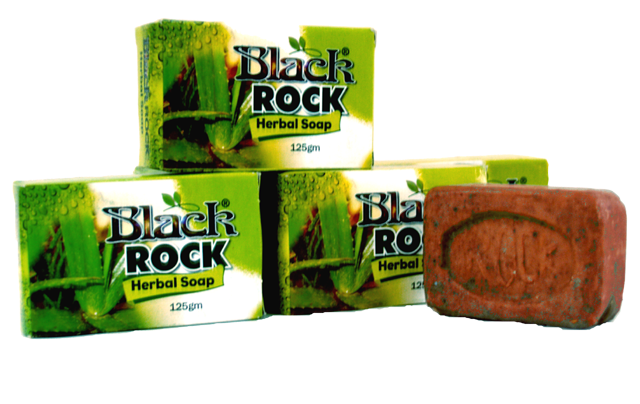
Black Rock Soap
Made in Tema, Ghana... Black Rock soap is refreshingly aloe-scented and good for washing up for bed or a meal.  It is good for sensitive skin.


Dudu Osun

A Nigerian soap that is very good for making skin soft.  The original smells very good and there is a new Tropical smell that is good too, but more fruity.  I like the liquid soap from Dudu Osun because it is liquid... and it smells like the original.
Original
New Tropical
Liquid


Nubian Heritage


Nubian Heritage comes from New York.  Many stores, including Macy's, sell Nubian Heritage.  They also have a line of lotions, body washes and other "smell-goods".

I really like the Honey and Black Seed soap from Nubian Heritage.  Other types include:
Peppermint Soap w/Crushed Almonds & Baking Soda
Ivorian Cocoa Butter Soap w/Milk Chocolate
Lemongrass & Tea Tree Soap 
Raw Shea Butter with Frankincense & Myrrh Soap
Olive Butter & Green Tea Soap
Mango Butter Soap
Lavender & Wildflowers Soap
Indian Hemp & Haitian Vetiver Soap
(The lemongrass and tea tree removes razor bumps) 
Sunaroma
 Also out of NY (Brooklyn to be exact), Sunaroma is another great source of black soap.  Their e-store offers a varity of soap and hair care products.
The oatmeal and vitamin e soap is good for smoothing rough skin around elbows and knees as well as eczema.  I have not tried all of their soaps besides that or their Egyptian Musk.  Good lookin' Brooklyn.


Raw Options

If you are looking for larger quantities of Black Soap, you should try going to an African fair for Kwanzaa or during the Summer. Otherwise, you can try online options like Amazon or go to an importer if you live in a large city, like African Art and Objects in Chicago.

Gullah Girl Tea

Tea is often seen as something medicinal and only to be taken during times of illness.  This Western concept overlooks the importance of tea as a social libation.  In many parts of Europe, Africa and Asia, tea is used as a way to commune with friends and neighbors, as well as healing.  Charmaine Bee crafts a special brand of teas for both ceremonial and curative purposes.  She incorporates her Gullah ancestry into her tea blends known as Gullah Girl Tea.


The Gullah are an African people that currently live along the lower coastal regions of South Carolina and Georgia, and also the outlying sea islands.  Many Gullah are descendants of West Africans from the Rice Coast (present day Sierra Leone and surrounding nations) that were brought to the Americas through Bahia, Brazil and eventually sold to planters in the Carolinas, Georgia and Florida.  The Gullah language (sometimes called GeeChee) is a mixture of English and African words.  "The Gullah language is related to Jamaican Creole, Barbadian Dialect, and the Krio language of Sierra Leone in West Africa. Gullah storytelling, cuisine, music, folk beliefs, crafts, farming and fishing traditions, all exhibit strong influences from West and Central African cultures." (wiki)

In a recent interview I talked with Charmine about Gullah Girl Tea.

Buy Africa: What is Gullah Girl Tea and why did you come up with it?


Charmaine Bee:  "Gullah Girl Tea is the name of the tea company I recently started.  I remember visiting my Grandmother in South Carolina, before my mother and I re-located there.  She had a huge yard, and people were always coming by for cookouts and to hear her words of wisdom.  I later learned that my grandmother used many leaves in her yard to aid in healing and that all twelve of her births were natural.  Whenever I go back home to South Carolina I observe the rapid changes that are taking place, as the Sea Islands are becoming rapidly over developed (gentrified). 

Using teas for medicinal purposes as well as a central point for gatherings, collectivity and creative all seemed to be in line with the history of my ancestry. I named the company Gullah Girl Tea in order to honor that heritage. 
"
Charmaine Bee

B A: Tell us the story of how you make Gullah Girl tea.


C B: Well, I’ve been learning about different health benefits of teas.  This journey actually began when I went away to college and became vegetarian.  I was so thirsty for knowledge about health, especially since the majority of my women family members are diabetic, including my 12 year old niece.  I felt that it was my responsibility to my family and community to find ways for us to heal naturally.  That is how it all began.  Now, I research herbs, and tea leaves and incorporate fruits either to enhance medicinal benefits or just to create a tasty blend combination.


B A: What is your favorite flavor of Gullah Girl Tea?

C B: Hmmm, lol. Hard question.  I love all of them for different reasons and when I’m in different moods. With the winter here, though, I’d have to say that I absolutely am in love with the coconut vanilla rooibos, it’s so warm and comforting!  I also love the Jasmine Blueberry, it has a deliciously earthy flavor...


B A: How can people get Gullah Girl Tea?


C B: Well, I currently sell the tea on [my] blog.  So orders can be made directly on the blog:gullahgirltea

I’m also starting a bike delivery service for people who live in New York City.  Free delivery in Brooklyn and a small charge for other boroughs.  Information about the service will be listed on the facebook page and blog.  Also, I’m always looking for shops to sell the tea in!

B A: What are all the flavors of Gullah Girl tea?

C B:

The current flavors are:
Rosemary Sage Mint
Jasmine Blueberry
Coconut Vanilla Rooibois
Cocount Vanilla Rooibos Chai
Green Mint

Summer blends include:
White Nectarine Jasmine


Facebook
Twitter

More about the Gullah

"The Gullah are a distinctive group of Black Americans from South Carolina and Georgia in the southeastern United States. They live in small farming and fishing communities along the Atlantic coastal plain and on the chain of Sea Islands which runs parallel to the coast. Because of their geographical isolation and strong community life, the Gullah have been able to preserve more of their African cultural heritage than any other group of Black Americans. They speak a creole language similar to Sierra Leone Krio, use African names, tell African folktales, make African-style handicrafts such as baskets and carved walking sticks, and enjoy a rich cuisine based primarily on rice...


The connection between the Gullah and the people of Sierra Leone is a very special one. Sierra Leone has always had a small population, and Sierra Leonean slaves were always greatly outnumbered on the plantations by slaves from more populous parts of Africa—except in South Carolina and Georgia. The rice plantation zone of coastal South Carolina and Georgia was the only place in the Americas where Sierra Leonean slaves came together in large enough numbers and over a long enough period of time to leave a significant linguistic and cultural impact. While Nigerians may point to Brazil, Cuba, and Haiti as places where Nigerian culture is still evident, Sierra Leoneans can look to the Gullah of South Carolina and Georgia as a kindred people sharing many common elements of speech, custom, culture, and cuisine."

source